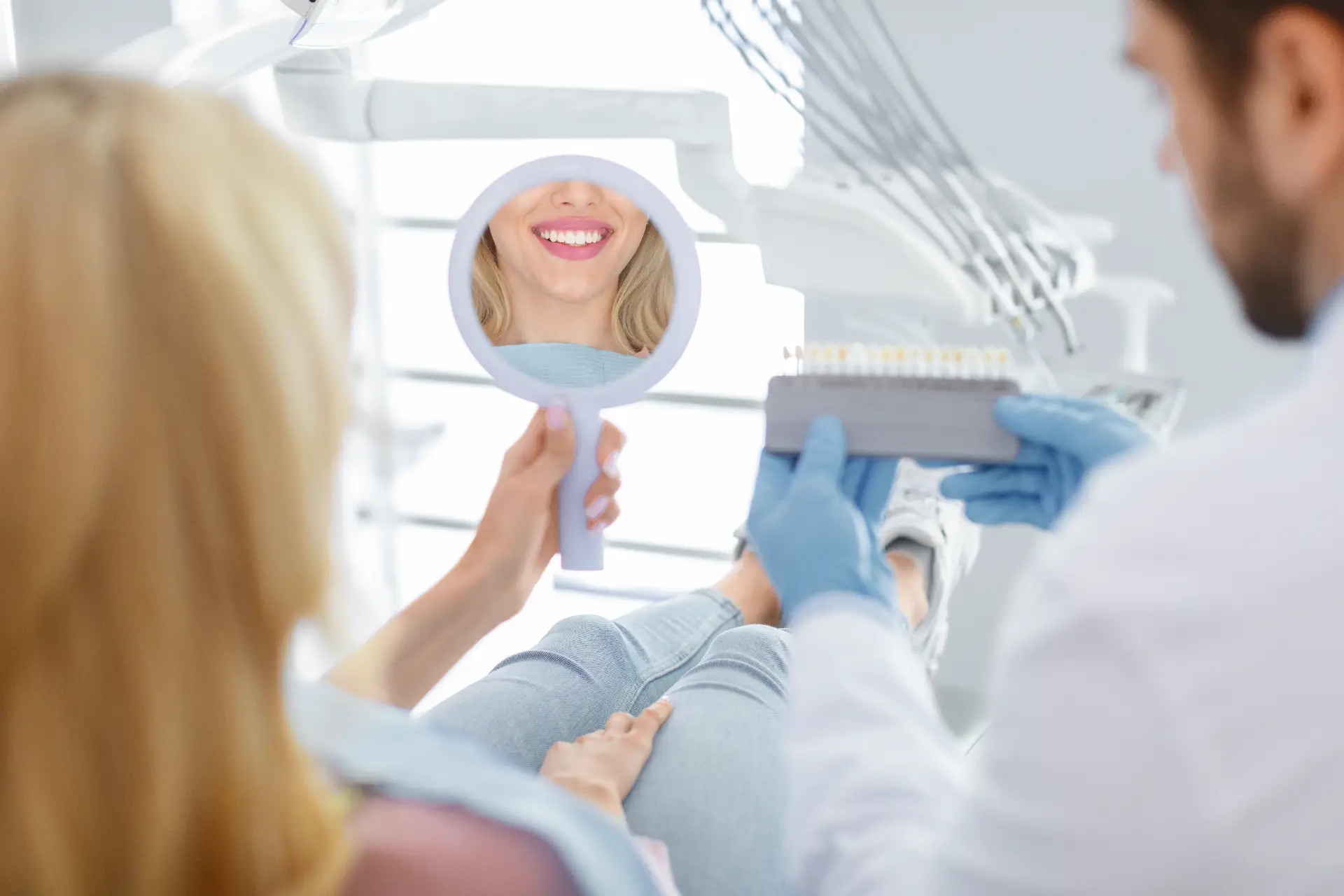

Do you ever look in the mirror and wish you could change something about your smile? Maybe your teeth are a little crooked, or slightly discolored, or you have a chip that bothers you.
Cosmetic dentistry is a branch of dentistry focused on improving the appearance of your teeth. It addresses issues like discoloration, chips, gaps, and misalignment, helping you achieve the smile you’ve always wanted.
In this blog post, we’ll break down exactly what cosmetic dentistry can do for you, how to find an awesome dentist for the job, and how a brand-new smile can boost your life.
Feeling a little insecure about your teeth can be a bummer. Maybe you avoid smiling in photos or hesitate to laugh out loud. But guess what? There’s a fix for that! Cosmetic dentistry is about way more than just a pretty smile – it’s about unlocking a whole new level of confidence.
Key Takeaways
- Cosmetic dentistry focuses on improving the aesthetics of your smile. It addresses imperfections such as discoloration, chips, gaps, and alignment issues.
- Cosmetic dentistry can significantly enhance self-confidence. A beautiful smile can positively impact social and professional interactions.
- A variety of cosmetic dental procedures are available. Your dentist can help personalize a treatment plan to achieve your desired results.
- Choose a cosmetic dentist with experience and qualifications. Review their portfolio, and patient testimonials, and consider their approach to patient care.
- Cosmetic procedures can be an investment. Discuss costs, financing options, and potential insurance coverage with your dentist to plan accordingly.
Understanding Cosmetic Dentistry
Cosmetic dentistry is a specialized field of dentistry focused on enhancing the appearance of your teeth, mouth, and overall smile. Unlike general dentistry, which focuses on oral health, cosmetic procedures aim to make those pearly whites brighter, straighter, and more aesthetically pleasing. While the main goal is an improved look, cosmetic dentistry can also offer restorative benefits for damaged or missing teeth.
Goals of Cosmetic Dentistry
Cosmetic dentistry has several key objectives:
- Enhanced Appearance: Transforming smiles by addressing discoloration, chips, gaps, misshapen teeth, and other imperfections. This can create a more balanced and harmonious appearance.
- Boosting Self-Confidence: When you’re embarrassed about your smile, it can hold you back. A beautiful smile, on the other hand, can give you a serious confidence boost in social and professional settings.
- Improved Oral Health: Many cosmetic procedures also contribute to better overall oral health. Straightening crooked teeth makes them easier to clean, and replacing missing teeth can protect your jawbone and gum health.
- Better Quality of Life: When you feel great about your smile, it radiates outwards! Cosmetic dentistry can have a profound impact on how you interact with others, your self-image, and your overall sense of happiness. A smile you love is a powerful asset.
Types of Cosmetic Dentistry Services
Cosmetic dentistry offers a wide range of techniques and procedures to address various aesthetic concerns. Here’s a look at some of the most common treatments:
Teeth Whitening
Teeth whitening lifts stains and discoloration to reveal a brighter, whiter smile. Professional teeth whitening in a dental office offers fast, dramatic results compared to over-the-counter options. Your dentist can also suggest ways to maintain a brighter smile, including touch-up treatments and smart food and drink choices.
Dental Veneers
Veneers are extremely thin, custom-made shells of porcelain or composite material that are bonded to the front surface of teeth. These can mask a wide variety of imperfections, including chips, cracks, discoloration, and gaps. Veneers are a popular choice for creating a complete smile makeover. Your dentist will help you decide if veneers are a good option for achieving your smile goals.
Dental Bonding
In dental bonding, a tooth-colored composite resin is applied to the tooth and sculpted into the desired shape. This versatile technique can fix chips, close small gaps, and improve the appearance of misshapen teeth. Bonding is a relatively affordable and quick cosmetic solution.
Invisalign and Orthodontics
Invisalign is a popular orthodontic treatment that uses a series of clear, custom-made aligners to gradually shift teeth into a more desirable position. It offers a discreet alternative to traditional metal braces. Orthodontic treatment can correct crooked or crowded teeth, underbites, overbites, and other bite issues. While the primary goal of orthodontics is improving oral health, it also has significant cosmetic benefits, creating a more balanced and beautiful smile.
Dental Crowns
Dental crowns are tooth-shaped caps that completely cover a damaged or decayed tooth. They can be made from various materials like porcelain, ceramic, or metal. Crowns restore the strength, function, and appearance of a compromised tooth. They are also used to protect teeth after procedures like root canals. In addition to their restorative benefits, dental crowns can enhance the overall appearance of your smile.
The Cosmetic Dentistry Process
Transforming your smile involves a few key steps. While specific procedures will vary, here’s what you can generally expect:
Consultation and Planning
The first step is a consultation with your chosen cosmetic dentist. You’ll discuss your concerns, goals for your smile, and your overall dental health. Your dentist will thoroughly examine your teeth, gums, and bite, and may take X-rays or digital scans. Together, you’ll develop a personalized treatment plan tailored to achieve your desired results.
Treatment and Recovery
The length and complexity of your treatment will depend on the procedures involved. Many cosmetic treatments can be completed in as little as one or two visits. Some, like Invisalign or dental implants, may require a series of appointments over a longer period.
Your dentist will provide detailed instructions on any necessary aftercare and advise you on estimated recovery times. While minor discomfort is possible with some procedures, most cosmetic treatments have relatively short and easy recovery periods.
Maintaining Your Results
The key to enjoying your new smile for years to come is good oral hygiene and regular dental checkups. Your dentist will give you specific guidance on care for your veneers, implants, or any other cosmetic work you have done.
Choosing the Right Cosmetic Dentist
A skilled and experienced cosmetic dentist is crucial for achieving beautiful, long-lasting results. Here are some key factors to consider when making your decision:
1. Qualification and Experience
Seek a dentist who holds a Doctor of Dental Surgery (DDS) or Doctor of Medicine in Dentistry (DMD) degree and has completed any additional training or certifications focused on cosmetic dentistry. Look for dentists who are members of professional organizations like the American Academy of Cosmetic Dentistry (AACD).
2. Before and After Galleries
Many cosmetic dentists showcase their work with before and after photos of their patients’ smiles. Reviewing these galleries can give you a sense of the dentist’s skillset, aesthetic approach, and the type of results you can potentially achieve.
3. Reviews and Testimonials
Checking online reviews and patient testimonials can offer valuable insights into other patients’ experiences with the dentist. Look for comments on the dentist’s skill, communication style, chairside manner, and overall patient satisfaction.
4. Schedule a Consultation
The best way to gauge a good fit is to schedule a consultation with the dentist. This allows you to discuss your goals, ask questions, and assess the dentist’s communication style and bedside manner. You should feel comfortable voicing your concerns and confidence in the dentist’s ability to understand your vision.
By prioritizing these factors, you can find a qualified and experienced cosmetic dentist who can create the beautiful, healthy smile you deserve.
Cost and Financing of Cosmetic Dentistry
The cost of cosmetic dentistry can vary significantly depending on several factors, including:
- Type of procedure: Some procedures, like teeth whitening, are generally more affordable than those like dental implants or a full set of veneers.
- The complexity of the case: More extensive smile makeovers naturally incur a higher cost than single-tooth treatments.
- Materials used: Certain materials like porcelain are more expensive than composite alternatives.
- Location of the dentist: Costs of cosmetic dentistry can fluctuate depending on the geographic region and the individual dentist’s practice.
Financing Options
Since most dental insurance plans do not cover purely cosmetic procedures, here are some financing options to consider:
- Dental Savings Plan: These plans offer discounts on various dental treatments, including cosmetic ones, in exchange for an annual membership fee.
- Third-party financing: Many companies offer financing specifically for medical and dental procedures, allowing you to make monthly payments with interest over time.
- In-house payment plans: Some dental offices offer their own payment plans to help patients spread out the cost.
It’s important to discuss costs and financing options transparently with your cosmetic dentist during the consultation phase to create a plan that fits your budget and goals.
Your Smile, Your Confidence
Cosmetic dentistry offers a powerful path to transforming not only your smile but also your overall confidence and happiness. If you’ve been wishing for changes to your teeth, don’t let hesitation hold you back! Start by understanding your goals – what would you like to change about your smile? Then, invest time in researching skilled and experienced cosmetic dentists. Explore your options, learn about the different treatments that align with your desired results, and work with your chosen dentist to create a personalized plan for your smile journey.
Investing in your smile is an investment in yourself. Take that first step, schedule a consultation, and unlock the power of a confident, radiant smile!
Ready to Transform Your Smile?
If you’re dreaming of a brighter, straighter, and more confident smile, the team at Image Dental is here to help you make it happen! Our skilled cosmetic dentists will work with you to create a personalized plan to achieve your best smile.
Don’t wait any longer. Schedule your cosmetic dentistry consultation today and embark on a journey to a smile you’ll love. Book now online or call us at (209) 955-1500.
Dr. Stephen Nozaki is the owner and lead dentist at Image Dental in Stockton. He is a dedicated professional born and raised in California's Central Valley. With a commitment to his community, he brings advanced dental techniques learned from extensive education and continuous training from around the world. A third-generation Japanese American, Dr. Nozaki has a rich background that includes international living and a deep passion for both dentistry and outdoor activities. His focus in dentistry aligns with his passion for cosmetics and dental implants.